⏱ 4 min read

Bitcoin mining went from laptops to industrial scale. Here's how the mining world is organized today.

Miners and Mining Pools
0 / 4
1
Step 1 / 4

Solo Mining vs Pools

Solo Mining vs Pools

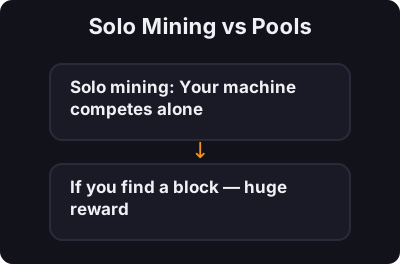
Solo mining: Your machine competes alone. If you find a block — huge reward! But with one small machine, you might wait years (or never).

Pool mining: Thousands of miners combine computing power. When the pool finds a block, rewards are split proportionally. Steady small payouts instead of lottery odds.
2
Step 2 / 4

How a Pool Works

How a Pool Works
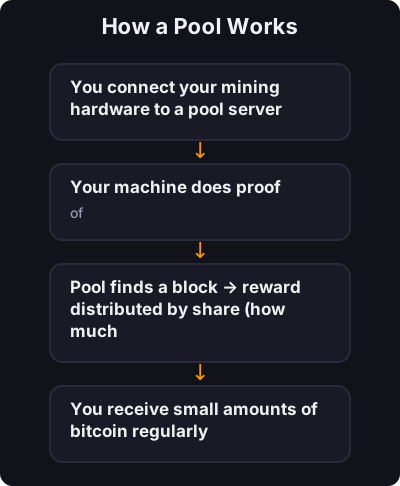
  1. You connect your mining hardware to a pool server
  2. Your machine does proof-of-work on the pool's behalf
  3. Pool finds a block → reward distributed by share (how much work you contributed)
  4. You receive small amounts of bitcoin regularly

Popular pools: Foundry, Antpool, F2Pool, Slush Pool (names change — research current options).

3
Step 3 / 4

Mining Hardware

Mining Hardware
Era Hardware Status today
2009–2013 CPU (laptop) Obsolete
2013–2016 GPU (graphics card) Obsolete for Bitcoin
2016–now ASIC (specialized chips) Required

ASIC = Application-Specific Integrated Circuit — chips built only for Bitcoin mining. A modern ASIC is millions of times faster than a laptop.

4
Step 4 / 4

The Halving

The Halving

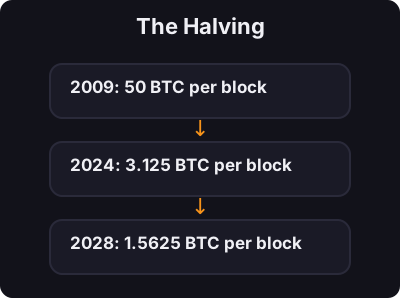
Every ~4 years, the block subsidy halves:

  • 2009: 50 BTC per block
  • 2024: 3.125 BTC per block
  • 2028: 1.5625 BTC per block

This continues until ~2140 when all 21 million bitcoin exist. Mining rewards shift toward transaction fees over time.

✅ Key takeaway

Small miners join pools for steady payouts. ASIC hardware dominates. The halving reduces new supply every four years — a key part of Bitcoin's scarcity.

🎯

Quest Challenge

Answer correctly to earn XP and unlock the next quest.